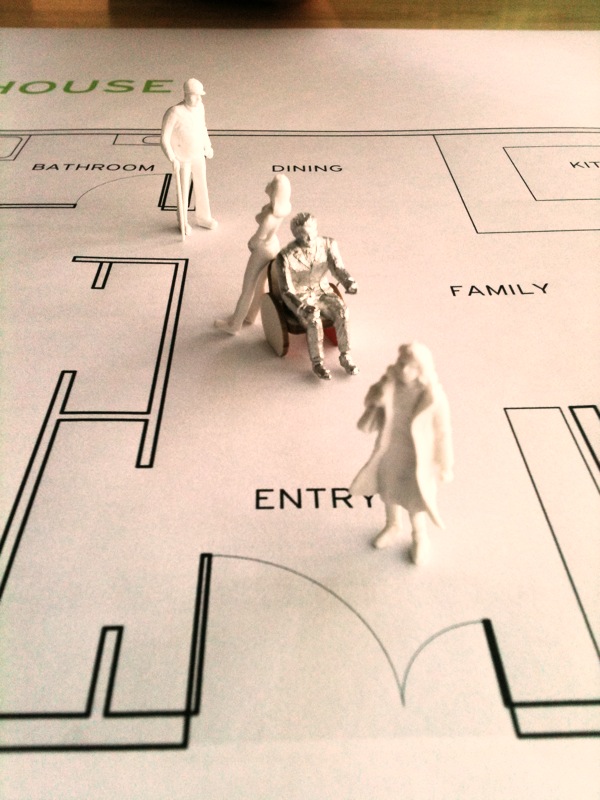
Accessible Veterans Housing
A home for injured veterans has to work for bodies and minds that standard accessibility codes don't account for. I led the research and spatial design behind a house built around that idea.
A house can meet every ADA checkbox and still fail an injured veteran. People find their own workarounds based on what their body and mind can actually do, and standard accessibility design rarely leaves room for that.
We interviewed and observed 30 people with different accessibility needs, talked with their families, and brought in nearly two dozen experts. What came out of it wasn't one collective experience. It was seven dualities: pairs of needs in tension that show up again and again for disabled soldiers and the people around them.
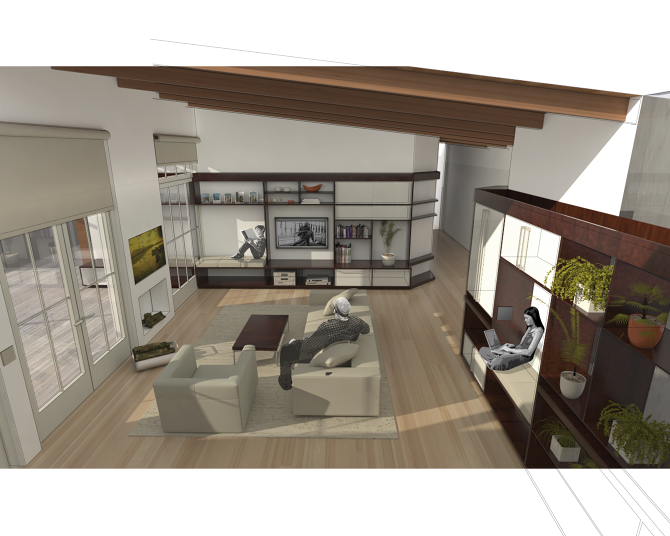
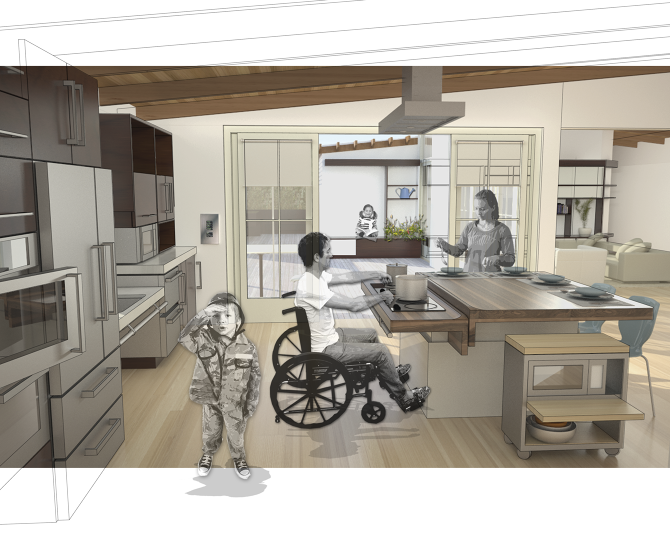
The kitchen is the hub of most homes, so adjustable-height counters let a veteran cook alongside their kids instead of being sidelined. For veterans with PTSD, the open living room keeps sightlines clear but still tucks in a few protected nooks. Open and safe, not one or the other.
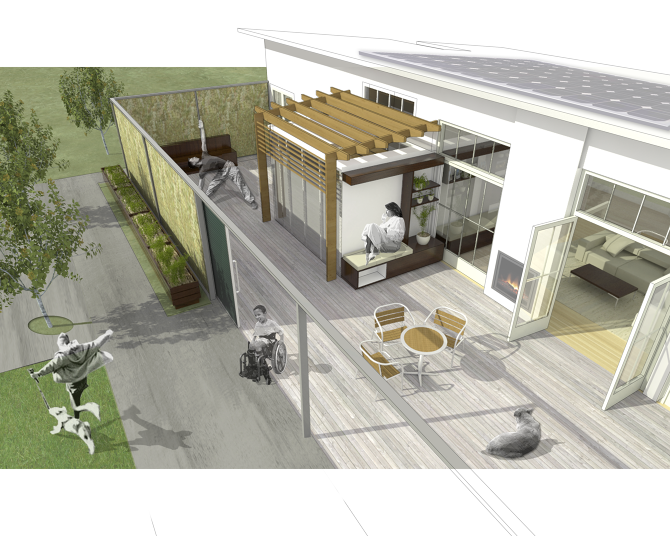
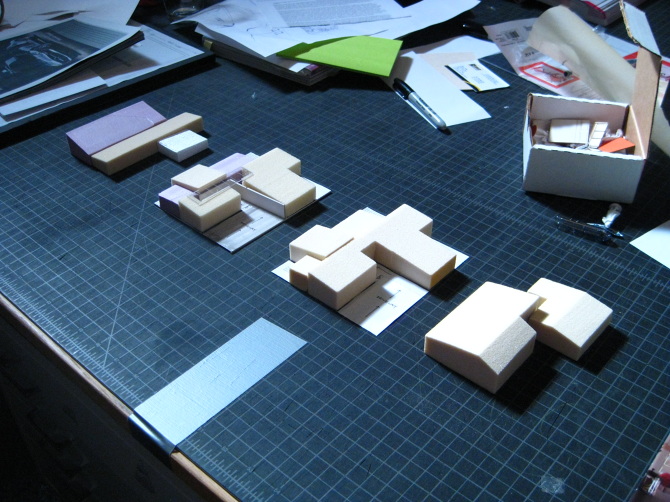
Indoor and outdoor spaces flow together with no steps or level changes, a baseline that sounds obvious and turned out to matter more than anyone expected. We tested the spatial ideas with physical volume models and full-scale interior mockups before committing to a single wall.
The house, known as the Duality House, was built as a model for veterans housing and has since informed Clark Realty's broader accessible housing work.