Portable Optometry Kit
Eyenetra had a working phoropter shrunk down to fit in your hand. My job was turning that mechanism into a device someone would actually want to hold up to their face.
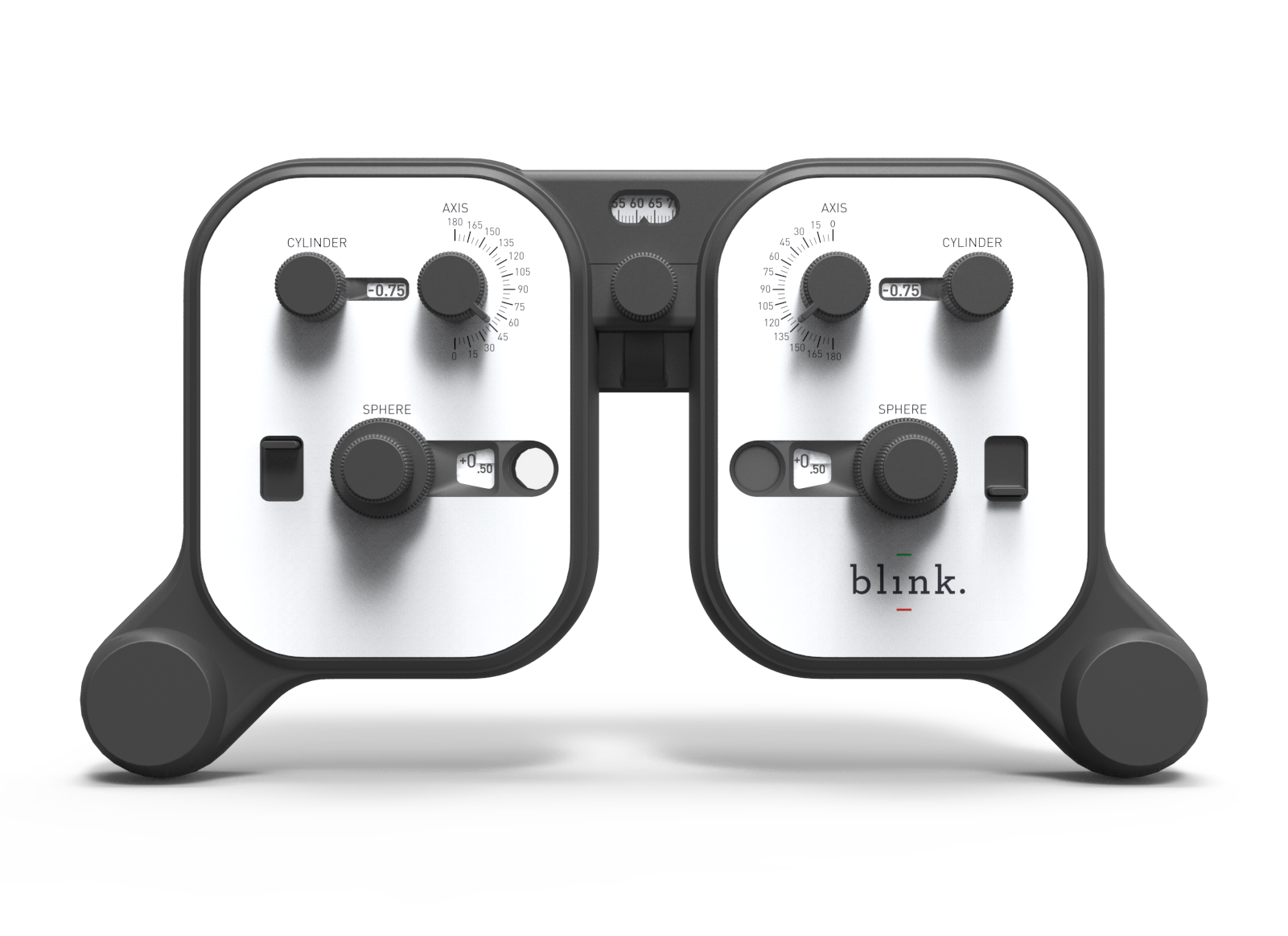
Eyenetra's engineers had already done the hard part: shrinking a full-size phoropter, the machine an optometrist uses to test your eyes, down into a handheld mechanism of gears and lens carriages. It worked. It just looked and felt like lab equipment. My job was making it something a patient would take from a stranger's hands without hesitating.

We built a new prototype almost every day. Each one got held, aimed, looked through. I worked closely with Eyenetra's lead mechanical engineer, so every tradeoff a prototype turned up got solved together instead of thrown over a wall.

The original had knobs and levers scattered along the sides, right where a patient's hands would land. We moved every control to the front, in reach of the optometrist, and gave the patient two paddle-shaped handles instead. Simple fix, but it took real prototyping to see it.

Inside, there's a strict system of spacing and alignment holding gears and lenses in place, which meant constant back and forth with engineering just to get the surfaces to close around it cleanly. None of that shows on the outside. That's the point.

The design went into production as Eyenetra's flagship device, used in clinics and pharmacies to make basic eye exams faster and cheaper to deliver.
